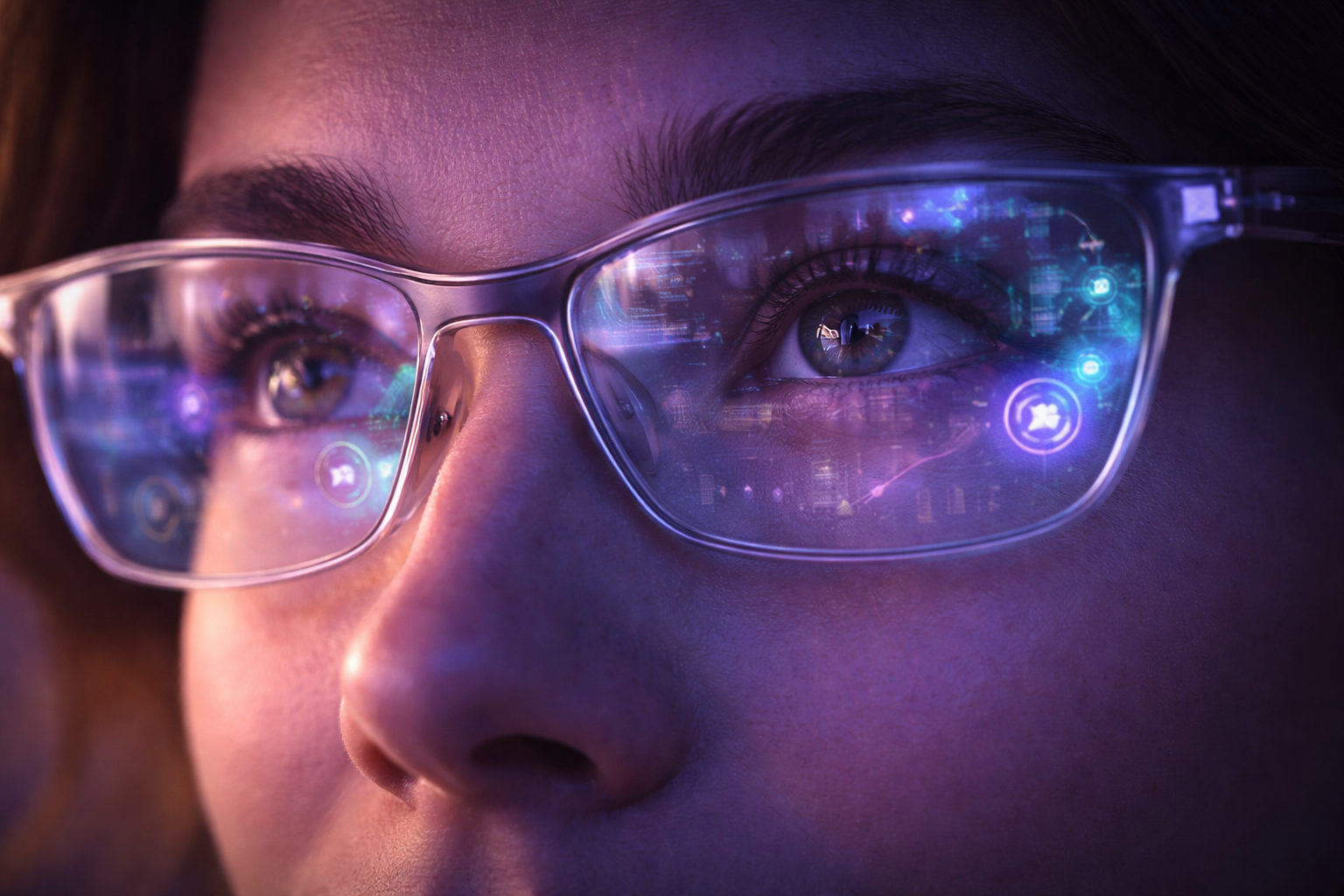
Technology has spent decades asking people to adapt themselves to the shape of the machine. Open the application. Find the menu. Translate your purpose into fields, buttons, and workflows. Remember where the setting lives. Repeat.
That pattern has produced extraordinary capability, but it also produces friction. People carry too much interface in their heads. Attention becomes the price of participation. The system knows what it can do, but often loses sight of why the person came to it.
Beyond screens. Built on trust.
The problem is not the screen
Screens are useful. They can make information visible, give people precise control, and provide a shared surface for work. The problem is not that screens exist. The problem is treating the screen as the only place where computing can meet a human purpose.
When every task becomes another application to open and another interface to learn, the technology begins to dominate the activity. The person stops doing the thing and starts managing the system that is supposed to help them do it.
A more human direction does not mean removing structure. It means putting structure in service of context. The right information should arrive where it is useful. The next step should be understandable. The person should be able to remain oriented without surrendering judgment.
Intent should matter more than interface ceremony
The next interface is not necessarily a better screen. It is a better relationship between purpose and action.
People often know what they are trying to accomplish before they know which command, endpoint, menu, or workflow will get them there. A capable system can help translate that intent into a structure the person can inspect, adjust, and approve.
That translation must remain visible. The system should not silently turn a suggestion into an irreversible action. It should show what is about to happen, preserve a path to correction, and make uncertainty easier to see rather than smoothing it away.
This is why preview, edit, undo, and clear scope matter. They are not decorative features. They are part of the relationship between capability and control.
Calm is a design discipline
Calm technology is not empty technology. It is technology that knows when to speak, what to show, and when to get out of the way.
Calm requires restraint:
- one meaningful idea instead of a pile of competing prompts;
- information grounded in the place and moment where it matters;
- motion that communicates rather than distracts;
- controls that make stopping, retreating, or turning assistance off straightforward;
- accessibility and comfort treated as design conditions, not late corrections.
The goal is not to make people dependent on a system that constantly demands attention. The goal is to reduce unnecessary cognitive load while leaving the person more capable and more present.
Foundations have to come first
A spatial interface can be beautiful and still fail if the system beneath it is unreliable. An AI assistant can be impressive and still be unsafe if its authority, data access, and effects are unclear.
That is why HoloModular® treats the future direction as a foundation problem before it is an interface problem.
Build is about understanding the system, preserving its meaning, strengthening its foundation, and creating an operator experience people can use and improve.
Platform is about the concrete layers that carry that work. ServiceBricks® provides a domain-oriented foundation for services and WebApps. ServiceQuery® gives APIs structured query capability while leaving policy and authorization with the API.
Trust is the boundary around all of it. Capability does not become authority by implication. Generated output does not become semantic truth merely because it was generated. A future interface does not remove the need for provenance, security, recovery, or human responsibility.
The direction is human capability
HoloModular® is interested in what becomes possible when technology can meet people in the context of their lives instead of requiring every purpose to be translated into a screen workflow first.
That includes human-centered AI, spatial computing, and experiences beyond screens. It may include learning that becomes more tangible, creation that becomes more spatial, guidance that arrives where a task is happening, and collaboration that shares context rather than only words.
But the direction is not a claim that every described experience exists today. It is a design and company thesis grounded in the work we are doing now: dependable systems, inspectable foundations, clearer boundaries, and software that preserves the meaning people have built into it.
Scope and status
This article expresses HoloModular® direction and design principles. It is not a product availability statement, a guarantee of future behavior, or independent proof that every future interface described here has been implemented.